Home > Journal > Types of Hair Loss > Hair Loss in Women > Ludwig Scale
Female Hair Loss Stages

The Ludwig / Savin Scale

Understand the stages of female pattern hair loss, recognise changes in your parting and crown, and learn which treatment approaches are commonly considered as thinning progresses.

3 Main Stages From mild thinning to advanced loss
Central Parting Widening of the part is a common early sign
Earlier Is Better Early-stage thinning generally offers more treatment options

The Ludwig Scale is a widely used classification system for describing the severity of female pattern hair loss (androgenetic alopecia).

Unlike the Norwood–Hamilton Scale used to describe the typical progression of male pattern baldness, the Ludwig system focuses on diffuse thinning across the top and crown of the scalp, usually while the frontal hairline remains relatively preserved.

The traditional Ludwig classification has three main stages. The related Savin classification provides additional detail, particularly around the width and density of the central parting.

Neither scale is a diagnosis by itself, but both can help women recognise progression and understand why acting during the earlier stages is important.

Visual Guide

Female hair loss progression.

Compare your overall pattern rather than focusing on individual hairs or a single period of increased shedding.

Ludwig Savin Scale showing stages of female pattern hair loss
The Ludwig / Savin Scale illustrates common patterns of progressive thinning across the top and crown of the female scalp.
Understanding Your Stage

The three main Ludwig stages.

Female pattern hair loss usually progresses through increasing levels of diffuse thinning rather than the receding hairline commonly associated with male pattern baldness.

I Early

Ludwig Stage I

Mild thinning begins across the top of the scalp. The central parting may look slightly wider, but overall coverage remains good.

  • Pattern: mild diffuse thinning
  • Scalp: slightly more visible along the part
  • Priority: early intervention and maintenance
II Moderate

Ludwig Stage II

Thinning becomes more pronounced, with a noticeably wider part and greater scalp visibility across the crown and top.

  • Pattern: moderate diffuse thinning
  • Scalp: clearly visible through affected areas
  • Priority: stabilisation and preservation
III Advanced

Ludwig Stage III

Advanced thinning produces significant scalp visibility across the crown, with substantially reduced density in the affected area.

  • Pattern: advanced diffuse loss
  • Scalp: substantial visibility
  • Priority: realistic expectations and specialist care
Treatment By Stage

What can you do at each stage?

Treatment should be based on the cause of your hair loss rather than the scale alone, but your stage can help set realistic expectations.

Stage I

Preserve & Support

Earlier thinning generally offers the widest range of options. Nutritional support, appropriate scalp care, topical treatments such as minoxidil and lifestyle changes may all form part of a long-term routine.

Stage II

Stabilise & Strengthen

Moderate thinning may benefit from a more comprehensive approach, combining established treatments with nutritional and scalp support. Medical assessment becomes increasingly valuable.

Stage III

Specialist Assessment

Once density has been substantially reduced, restoring full coverage becomes more difficult. A dermatologist or hair-loss specialist can assess remaining follicles and discuss realistic medical, cosmetic or surgical options.

Important Distinction

Not all female shedding belongs on the Ludwig Scale.

The Ludwig Scale is intended to describe female pattern hair loss. It should not automatically be used to classify sudden or temporary shedding such as telogen effluvium.

Increased shedding can occur following childbirth, significant illness, severe stress, rapid weight loss, nutritional deficiency or major hormonal changes.

Perimenopause and menopause can also coincide with changes in hair density, but the underlying cause may be female pattern hair loss, telogen effluvium or a combination of factors. If the pattern is unclear, professional assessment is worthwhile.

Non-Medical Hair Support

Drug-free support for women's hair.

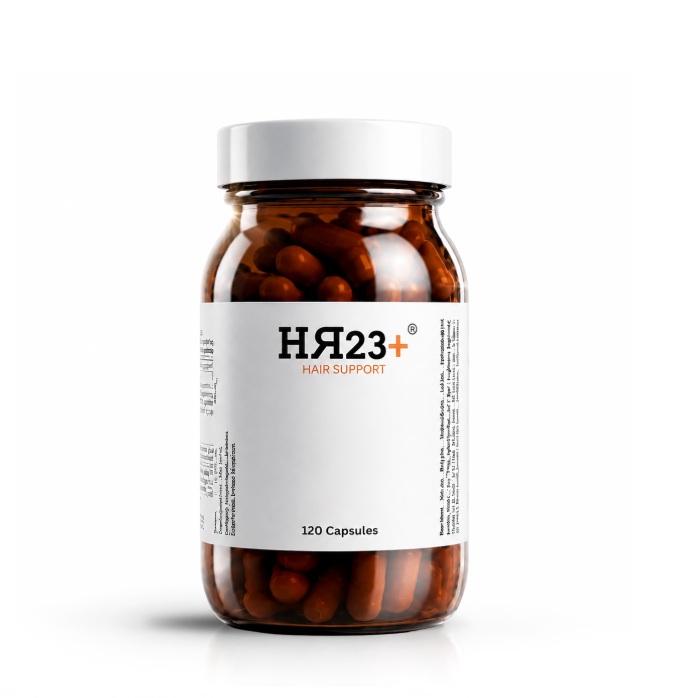
HR23+® is a comprehensive non-medical hair supplement designed to support normal hair health and help women experiencing excessive shedding or early-to-moderate thinning.

Nutritional support cannot restore follicles that have been lost, which is why it is best viewed as part of an early and consistent hair-care strategy rather than a treatment for advanced baldness.

  • 23 carefully selected ingredients
  • Supports normal hair and follicle health
  • Helps support stronger, fuller-looking existing hair
  • Non-medical and designed for consistent use
Discover HR23+ →
Practical Guidance

How to use the Ludwig Scale.

Think of the scale as a way to monitor your overall pattern, not as a substitute for diagnosis.

Compare your parting Look for gradual widening of the central part rather than judging hair loss from individual shed hairs.
Take consistent photographs Photograph the top and crown under similar lighting every few months to make subtle changes easier to identify.
Consider the pattern Diffuse thinning over the top is more typical of FPHL than isolated bald patches or sudden heavy shedding.
Investigate unusual changes Rapid loss, scalp pain, inflammation or patchy baldness should be assessed rather than simply assigned a Ludwig stage.
Common Questions

Ludwig Scale FAQs.

What is the Ludwig Scale?

It is a classification system used to describe the severity and progression of female pattern hair loss, particularly diffuse thinning across the top and crown.

What are the three Ludwig stages?

Stage I describes mild thinning, Stage II more noticeable diffuse thinning and scalp visibility, and Stage III advanced loss with substantially reduced density across the crown.

Is the Ludwig Scale the same as the Savin Scale?

They are closely related systems. The Ludwig Scale uses three broad stages, while the Savin system provides additional detail about progressive thinning and the appearance of the central part.

Does the Ludwig Scale measure temporary shedding?

No. It is designed primarily to classify female pattern hair loss. Sudden or temporary shedding may have a different cause and should be assessed separately.

Can female pattern hair loss be treated?

It can often be managed, particularly when recognised early. Treatment options may include topical treatments, nutritional support, lifestyle measures and clinician-guided therapies.

Disclaimer: This article is for informational purposes only and should not replace professional medical advice. Consult a dermatologist, trichologist or suitably qualified healthcare professional for diagnosis and personalised treatment.