

Grape Seed Extract for Hair Growth: What Does the Evidence Show?
Grape seed extract is rich in polyphenols called proanthocyanidins and has attracted interest in hair research because of its antioxidant activity and experimental effects on hair-follicle biology. But can it really stop hair loss or regrow thinning hair?
What is grape seed extract?
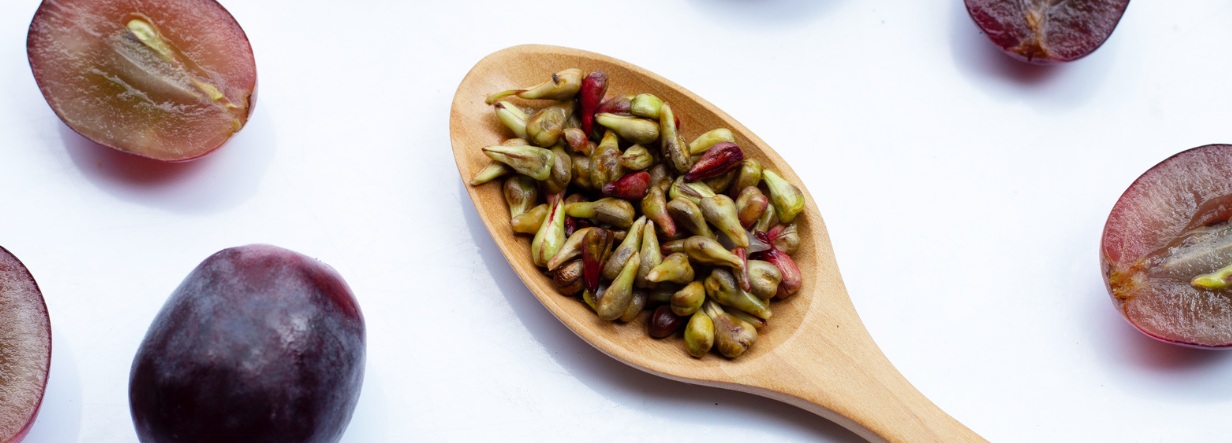
Grape seed extract is produced from the seeds of grapes and contains a concentrated mixture of naturally occurring plant compounds.
It is particularly rich in oligomeric proanthocyanidins, often shortened to OPCs, which belong to the wider polyphenol family.
These compounds have attracted interest for their antioxidant activity and wider effects on cellular and vascular biology.
That has also led researchers to explore whether grape-derived proanthocyanidins might influence hair-follicle activity.
Grape seed proanthocyanidins have shown interesting effects in laboratory and animal models. Those findings justify further research, but they should not be presented as proof that ordinary grape seed supplementation will reverse androgenetic alopecia in people.
Why are proanthocyanidins interesting for hair?
Antioxidant activity
Proanthocyanidins are polyphenolic compounds with antioxidant activity and are widely studied in relation to cellular protection and oxidative stress.
Follicle research
Grape seed-derived compounds have been investigated in experimental models for possible effects on hair-follicle and hair-cycle biology.
Plant polyphenols
The extract contains a concentrated mixture of plant compounds that makes it an interesting supporting botanical within multi-ingredient formulas.
Did grape seed extract really increase hair growth by 200%?
One of the most repeated claims online is that grape seed proanthocyanidins increased hair growth by more than 200%.
That figure originates from experimental Japanese research involving proanthocyanidins and hair-related models.
It is important not to translate that result directly into a promise of 200% more scalp hair in people.
A laboratory growth result is not the same as a human hair-count result.
Experimental studies can measure cell proliferation, follicle activity or hair growth in laboratory and animal models. Those measurements are very different from showing that a supplement doubles hair density in men or women with pattern hair loss.
The “200%” figure should therefore not be used as a consumer hair-regrowth promise.
Does grape seed extract prolong the anagen phase?
Some experimental research has suggested that grape seed proanthocyanidins may influence processes associated with the hair-growth cycle.
This has sometimes been described online as grape seed creating a “second anagen phase” or doubling the growth phase.
That wording is misleading when applied to people.
There is not strong clinical evidence showing that taking grape seed extract reliably creates an additional anagen phase in human scalp hair or doubles the duration of active hair growth.
Does grape seed extract block DHT?
Grape seed extract is sometimes grouped with saw palmetto and other botanicals marketed as “natural DHT blockers”.
Proanthocyanidins and related plant compounds have been investigated for a range of biological activities, and some experimental findings have generated interest in androgen-related pathways.
However, there is not good clinical evidence showing that grape seed extract significantly reduces scalp DHT in people with androgenetic alopecia.
It should therefore not be described as a clinically established 5-alpha-reductase inhibitor or as a natural equivalent to finasteride.
What can we reasonably say?
What looks interesting
- Rich source of proanthocyanidins.
- Strong interest in polyphenol research.
- Experimental studies have explored follicle activity.
- Antioxidant properties are well recognised.
- Hair-cycle effects have been investigated experimentally.
- Useful as a supporting botanical within a broader formula.
What hasn't been established
- That grape seed reverses male or female pattern hair loss.
- That it clinically blocks DHT.
- That it produces 200% more hair in people.
- That it doubles the human anagen phase.
- That it is as effective as minoxidil.
- That it reliably stops excessive shedding.
Is grape seed extract comparable to minoxidil?
No reliable clinical evidence supports treating grape seed extract as equivalent to minoxidil.
Minoxidil has been studied in human hair loss for decades and has an established clinical evidence base for androgenetic alopecia.
Grape seed extract does not currently have comparable human trial data.
Experimental similarities in a laboratory model do not establish equal effectiveness in real-world hair-loss treatment.
Does grape seed improve scalp circulation?
Grape seed polyphenols have been studied in relation to vascular function and blood-vessel biology.
This has led to claims that grape seed improves scalp microcirculation, delivers more oxygen to follicles and therefore stimulates new hair growth.
That chain of reasoning goes further than the evidence allows.
Hair follicles require a normal blood supply, but common pattern hair loss is not simply caused by insufficient circulation. Increasing vascular activity does not automatically reverse genetically driven follicle miniaturisation.
Can antioxidants protect hair follicles?
Oxidative stress is an active area of research in hair and skin biology, and grape seed extract is well known for its polyphenol content.
This gives grape seed extract a reasonable role as an antioxidant-rich botanical ingredient.
But claims that antioxidants directly extend the lifespan of each hair strand or prevent follicles from shedding are too simplistic.
Antioxidant activity is biologically interesting; it is not proof of clinical hair regrowth.
Three claims that need perspective
“Grape seed extract blocks DHT like saw palmetto.”
Grape seed contains biologically active polyphenols, but clinically meaningful DHT suppression in human scalp hair has not been established.
“It increases hair growth by more than 200%.”
The figure comes from experimental research and should not be interpreted as a 200% increase in human scalp-hair density.
“Grape seed works as well as minoxidil.”
There is not enough human clinical evidence to make that comparison. Minoxidil has a substantially stronger evidence base for androgenetic alopecia.
Why does HR23+® contain grape seed extract?
Grape seed extract is included in HR23+ as one of the botanical components of its broader 23-ingredient nutritional hair-support formula.
Its inclusion reflects the research interest surrounding proanthocyanidins, antioxidant activity and experimental hair-follicle biology.
It is not relied upon as a single ingredient capable of blocking DHT or reversing hair loss by itself.
Polyphenol-rich botanical
Grape seed provides naturally occurring proanthocyanidins and other plant polyphenols.
Interesting experimental evidence
Proanthocyanidins have been investigated in relation to hair-follicle activity and the hair-growth cycle.
Part of a broader formula
HR23+ combines grape seed with selected vitamins, minerals and other botanical ingredients rather than relying on one extract alone.
Support, not a cure
Grape seed is best viewed as a supporting botanical ingredient rather than a proven stand-alone treatment for androgenetic alopecia.
Grape seed extract is scientifically interesting — but the strongest hair claims run ahead of the evidence.
Grape seed extract contains proanthocyanidins with genuine biological and antioxidant activity, and experimental research has produced intriguing findings involving hair-follicle growth.
That makes grape seed a credible ingredient for further research and a sensible supporting botanical within a wider hair formula.
What the evidence does not establish is that grape seed clinically blocks DHT, doubles the human growth phase, increases scalp hair by 200% or works as effectively as minoxidil.
Grape seed extract. Part of a 23-ingredient formula.
HR23+® combines grape seed extract with 22 other selected vitamins, minerals and botanical ingredients in one dedicated daily hair-support formula for men and women.
Explore HR23+®Grape seed extract and hair growth: FAQ
Does grape seed extract help hair growth?
Grape seed proanthocyanidins have shown interesting effects in experimental hair research, but direct human clinical evidence for meaningful scalp-hair regrowth remains limited.
Does grape seed extract block DHT?
There is not strong clinical evidence showing that grape seed extract significantly reduces scalp DHT in people with androgenetic alopecia.
Did grape seed extract increase hair growth by 200%?
A widely quoted figure comes from experimental research involving grape seed proanthocyanidins. It should not be interpreted as proof that people taking grape seed extract will grow 200% more scalp hair.
Does grape seed extract prolong the anagen phase?
Experimental studies have explored effects on hair-cycle biology, but there is not strong evidence that grape seed supplementation reliably doubles or substantially prolongs the anagen phase in humans.
Is grape seed extract as effective as minoxidil?
No clinical evidence currently justifies that comparison. Minoxidil has a much stronger human evidence base for treating androgenetic alopecia.
What are proanthocyanidins?
Proanthocyanidins are naturally occurring plant polyphenols found in grape seeds and several other foods. They are widely studied for their antioxidant and biological activity.
Why is grape seed extract included in HR23+®?
Grape seed extract is included as one botanical component of HR23+'s broader 23-ingredient nutritional hair-support formula. Its inclusion reflects the scientific interest surrounding its proanthocyanidins and wider biological properties.
This article is for general information only and should not be considered medical advice. Persistent, sudden, severe or unexplained hair loss should be appropriately assessed. Research into grape seed extract and human hair growth remains limited, and individual responses to supplements vary.