

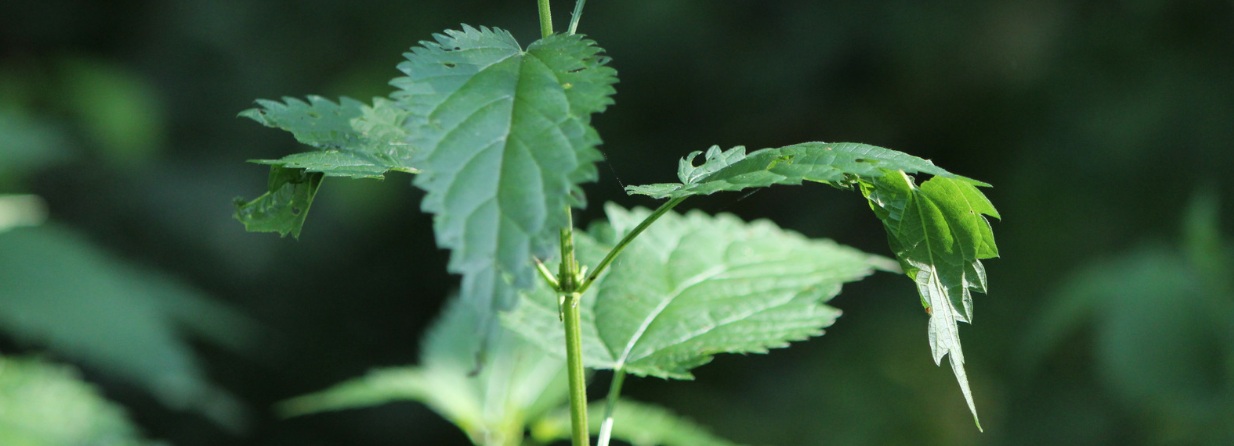
Stinging Nettle for Hair Loss: Does Nettle Leaf Really Help?
Stinging nettle has been used in traditional herbal preparations for centuries and is now found in a number of hair supplements and scalp products. Laboratory research has created interest in its anti-inflammatory and androgen-related activity — but how much evidence is there that nettle can actually prevent hair loss?
What is stinging nettle?
Stinging nettle, or Urtica dioica, is a perennial plant native to Europe and found widely across other parts of the world.
The leaves and roots contain numerous naturally occurring compounds, including polyphenols, flavonoids and other plant constituents that have attracted interest for their biological activity.
Nettle has a long history in traditional herbal medicine and is now available in teas, capsules, concentrated extracts, shampoos and topical scalp products.
In the hair-loss market, it is usually nettle leaf or nettle root extract that appears in multi-ingredient formulations.
Laboratory findings involving inflammation, enzymes and follicle-related cells make stinging nettle an interesting botanical ingredient. But this should not be confused with clinical proof that nettle alone stops or reverses human hair loss.
How could nettle leaf benefit the hair?
There are several reasons why nettle has attracted interest in hair and scalp products.
Extracts from Urtica dioica have been investigated for anti-inflammatory and antioxidant activity. Both are biologically interesting when considering general scalp health, although that does not mean inflammation is responsible for every form of hair loss.
Laboratory research has also investigated nettle extracts in relation to dermal papilla cells — specialised cells located at the base of the hair follicle that play an important role in regulating the hair-growth cycle.
These findings provide a rationale for further research, but laboratory activity in isolated cells does not automatically mean that taking a nettle supplement will produce measurable hair regrowth in humans.
Does stinging nettle block DHT?
Nettle is frequently described online as a “natural DHT blocker”, but the evidence is more nuanced.
Dihydrotestosterone — DHT — is formed from testosterone through the action of the enzyme 5-alpha-reductase. In genetically susceptible follicles, DHT plays a central role in androgenetic alopecia.
Compounds within nettle have been studied for possible effects on androgen-related pathways, including 5-alpha-reductase activity. This is one reason nettle has become popular in natural hair-loss formulas.
However, there is not enough direct clinical evidence to say that oral nettle leaf extract meaningfully reduces scalp DHT in people with pattern hair loss.
Possible 5-alpha-reductase activity is not the same as proven DHT suppression.
Laboratory evidence can help identify an interesting mechanism, but a botanical extract must still demonstrate a meaningful effect in human clinical studies before it can be regarded as an established treatment.
Nettle should therefore not be presented as a natural equivalent to clinically established DHT-targeting medication.
What does prostate research have to do with hair loss?
Some of the confusion around nettle and hair loss comes from research into benign prostatic hyperplasia (BPH).
Nettle root preparations have been investigated for urinary symptoms associated with an enlarged prostate. Because androgen pathways and 5-alpha-reductase are also relevant to prostate biology, this research is sometimes used to support claims about DHT and scalp hair.
But the two outcomes are not interchangeable.
Evidence that a nettle preparation may influence prostate-related symptoms does not demonstrate that the same preparation will prevent follicle miniaturisation or regrow scalp hair.
What can we reasonably say about nettle and hair loss?
What looks interesting
- Anti-inflammatory activity has been investigated.
- Contains naturally occurring antioxidant compounds.
- Laboratory research has explored follicle-related cells.
- Possible interaction with androgen-related pathways.
- 5-alpha-reductase activity is an area of research interest.
- Long history of use in botanical hair and scalp formulas.
What hasn't been established
- That nettle reliably stops male pattern hair loss.
- That it reverses female pattern hair loss.
- That it clinically blocks scalp DHT.
- That it reliably regrows miniaturised follicles.
- That it prevents telogen effluvium or seasonal shedding.
- That topical nettle is more effective than oral nettle.
Can stinging nettle stop excessive hair shedding?
There is not enough evidence to regard nettle as a general treatment for excessive shedding.
Hair fall can occur for many different reasons. Androgenetic alopecia, telogen effluvium, illness, nutritional deficiencies, hormonal changes, medications and physical damage to the hair can all produce very different types of thinning.
An ingredient with potential anti-inflammatory or androgen-related properties cannot automatically address all of those causes.
This is why claims that nettle simply “stops hair falling out” are too broad.
Topical nettle or nettle supplements?
Stinging nettle appears in both topical scalp products and oral supplements, but there is currently insufficient evidence to declare one route the most effective for hair growth.
Topical nettle
Nettle extracts may appear in shampoos, scalp tonics and serums. These can form part of a scalp-care routine, but there is limited clinical evidence that topical nettle alone produces significant hair regrowth.
Oral nettle extract
Concentrated nettle extracts are also used in supplements, including multi-ingredient hair formulas. Oral use should not be assumed to produce clinically significant DHT suppression.
What about nettle's antioxidants?
Stinging nettle contains various plant compounds with antioxidant activity, including polyphenols and flavonoids.
Antioxidants help protect cells from oxidative stress, which is a normal part of human biology and has been studied in relation to numerous health conditions.
However, describing antioxidants as substances that directly prevent hair shedding by “protecting the hair from free radicals” oversimplifies the science.
Antioxidant activity is biologically useful, but it does not establish nettle as a treatment for alopecia.
Three claims that need perspective
“Stinging nettle is a natural way to stop hair loss.”
This is too broad. Nettle has interesting biological properties, but it has not been shown to reliably stop the major forms of human hair loss.
“Nettle blocks DHT.”
Possible effects on 5-alpha-reductase and other androgen-related pathways have been investigated, but clinically meaningful DHT suppression in scalp hair has not been established.
“If nettle helps the prostate, it will prevent baldness.”
Prostate research and scalp-hair research involve different tissues, preparations and clinical outcomes. One cannot be used as proof of the other.
Why does HR23+® contain nettle leaf extract?
Nettle leaf extract is included in HR23+ as one of the botanical components of its broader 23-ingredient nutritional hair-support formula.
Nettle is particularly interesting because of research into its anti-inflammatory, antioxidant and androgen-related biological activity.
That provides a rationale for its inclusion within a multi-ingredient hair formula, without needing to claim that nettle alone is a proven DHT blocker or hair-loss treatment.
Botanical support
A traditional plant extract with interesting research into several biological pathways relevant to its wider use.
A plausible area of interest
Nettle has been investigated in relation to 5-alpha-reductase and androgen activity, although direct human hair evidence remains limited.
Part of a wider formula
HR23+ combines nettle with selected vitamins, minerals and botanical ingredients rather than relying on one herbal extract alone.
Support, not a cure
Nettle is an interesting supporting ingredient but should not be presented as a proven treatment for androgenetic alopecia or other forms of hair loss.
Stinging nettle is interesting for hair — but the evidence has limits.
Nettle has considerably more biological rationale than many ingredients casually marketed for hair growth. Its anti-inflammatory activity, antioxidant compounds and possible interaction with androgen-related pathways all justify continued research.
What is currently missing is strong clinical evidence showing that nettle itself can reliably stop shedding or regrow hair in people with androgenetic alopecia.
It is therefore better viewed as a supporting botanical ingredient than as a proven natural DHT blocker.
Nettle leaf extract. Part of a 23-ingredient formula.
HR23+® combines nettle leaf extract with 22 other selected vitamins, minerals and botanical ingredients in one dedicated daily hair-support formula for men and women.
Explore HR23+®Stinging nettle and hair loss: FAQ
Does stinging nettle help hair growth?
Nettle has interesting laboratory research involving inflammation, antioxidant activity and follicle-related biology, but there is currently limited clinical evidence showing that it directly increases scalp-hair growth in humans.
Does nettle block DHT?
Nettle has been investigated for possible effects on 5-alpha-reductase and androgen-related pathways, but it has not been established as a clinically proven DHT blocker for scalp hair loss.
Can nettle stop male pattern baldness?
There is not enough clinical evidence to regard nettle as a stand-alone treatment for male pattern hair loss.
Can women use nettle for thinning hair?
Nettle is included in some hair supplements and topical products intended for women as well as men. However, evidence that nettle alone treats female pattern hair loss remains limited.
Is nettle better as a shampoo or supplement?
There is insufficient clinical evidence to establish topical nettle or oral nettle supplementation as the superior method for promoting hair growth.
Does nettle help an inflamed scalp?
Nettle extracts have demonstrated anti-inflammatory activity in research, but persistent scalp inflammation, soreness, scaling or itching can have many causes and should not automatically be treated with nettle.
Why is nettle leaf extract included in HR23+®?
Nettle leaf extract is included as one botanical component of HR23+'s broader 23-ingredient nutritional hair-support formula. Its inclusion reflects its interesting biological properties rather than presenting nettle as a proven stand-alone hair-loss treatment.
This article is for general information only and should not be considered medical advice. Persistent, sudden, severe or unexplained hair loss or scalp inflammation should be appropriately assessed. Botanical supplements may cause side effects or interact with medicines, and individual responses vary.