

Scalp Massage for Hair Growth: Does It Really Work?
Scalp massage is simple, inexpensive and easy to add to a hair-care routine. But can massaging your scalp actually stimulate hair growth? Here’s what it may help with, what it cannot do, and how to use it properly.
Can scalp massage really help your hair?
Scalp massage is one of those hair-care techniques that sounds almost too simple to make any difference. It does not require medication, expensive equipment or a complicated routine — just gentle, repeated movement of the scalp.
There is some early research suggesting that regular scalp massage may influence hair thickness, while massage can also improve relaxation and temporarily increase blood flow at the scalp surface.
What it cannot do is permanently reverse advanced male or female pattern hair loss on its own. The most sensible way to think about scalp massage is as a supportive scalp-care habit rather than a standalone treatment.
A few minutes of massage may help keep the scalp comfortable, encourage regular scalp movement and provide a useful relaxation habit. It should not, however, be presented as a replacement for established treatments where those treatments are appropriate.
How might scalp massage support healthier-looking hair?
There are several possible reasons scalp massage remains popular among people trying to improve their overall hair and scalp routine.
Temporary increase in scalp blood flow
Massage can temporarily increase circulation in the skin and scalp. Hair follicles depend on a normal blood supply, although simply increasing circulation does not mean genetic hair loss will be reversed.
Mechanical scalp stimulation
Small studies have explored whether repeated mechanical stretching and stimulation of scalp tissue could influence hair thickness. Results are interesting, but research remains limited.
Relaxation and stress management
Massage can feel relaxing and may be a useful part of a stress- management routine. This matters because significant physical or emotional stress can contribute to temporary shedding in some people.
Scalp and hair conditioning
Gentle massage during washing can help distribute shampoo and natural oils across the scalp and hair. This may improve scalp comfort and help reduce the temptation to scratch aggressively.
How to massage your scalp properly
You do not need to use excessive force. In fact, harder is not better. A comfortable technique that you can repeat consistently is preferable.
Start with clean hands
Wash your hands first. Scalp massage can be performed on dry hair or while shampooing in the shower.
Use your fingertips, not your nails
Use the pads of your fingers and apply gentle pressure. Avoid scratching or dragging your fingernails across the scalp.
Move the scalp in small circles
Work slowly from the frontal hairline and temples towards the crown and back of the head. Try to move the scalp itself rather than aggressively rubbing the hair.
Cover the whole scalp
It is fine to spend a little more time on areas of thinning, but there is no need to press harder in those areas.
Aim for around 5–10 minutes
A short, regular routine is more realistic than an intense session once every few weeks. Several sessions per week is a practical starting point.
Getting scalp massage right
Do
- Keep pressure comfortable and controlled.
- Use fingertips or a soft silicone massage brush.
- Work across the whole scalp rather than one small area.
- Be consistent rather than aggressive.
- Stop if your scalp becomes sore or irritated.
Don't
- Scratch the scalp with your nails.
- Pull or twist the hair while massaging.
- Assume more pressure means more hair growth.
- Massage inflamed, infected or broken skin.
- Expect scalp massage alone to reverse bald areas.
Are scalp massage brushes worth using?
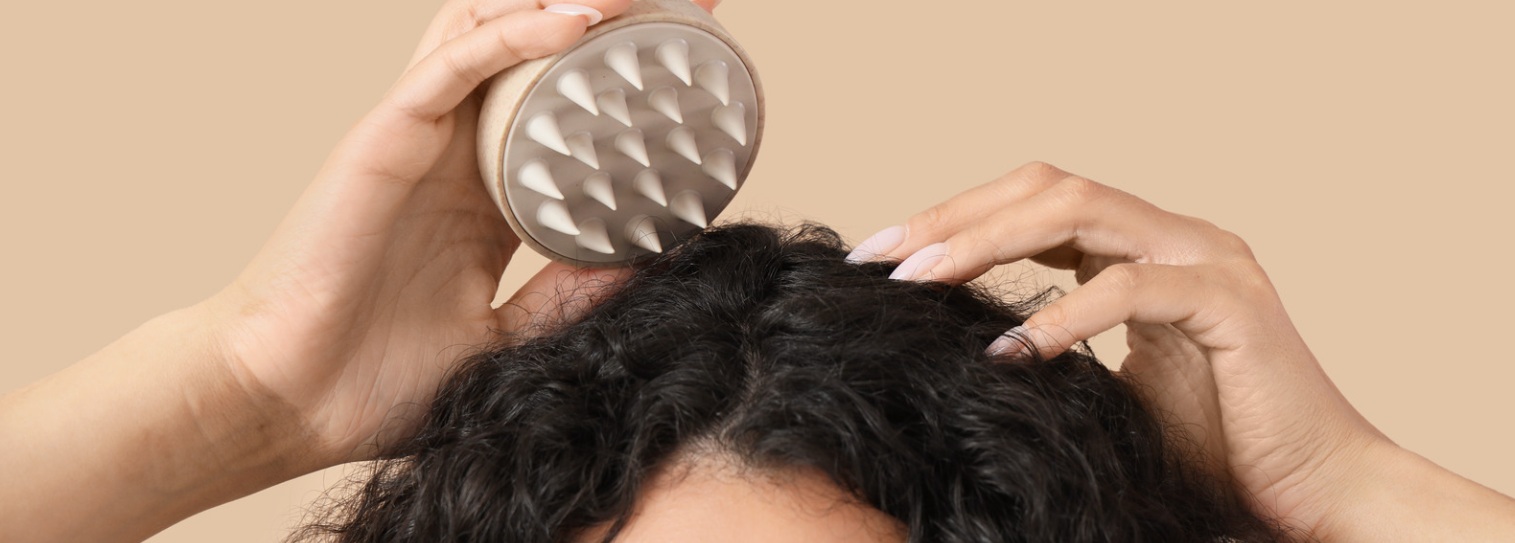
A soft silicone scalp massage brush can make the technique easier, particularly in the shower. The advantage is mainly convenience and consistency: the flexible tips can help move shampoo across the scalp without relying on fingernails.
Avoid hard plastic tools or anything that feels sharp. A massage device should stimulate the scalp without leaving it red, painful or irritated.
What about dedicated scalp-stimulation devices?
Devices such as the Growband are designed to provide more structured scalp movement than manual massage.
They may appeal to people who prefer a more consistent technique, but specialist scalp devices should still be viewed as an addition to a broader hair-care routine rather than proof of guaranteed regrowth.
How long does scalp massage take to work?
This is difficult to answer because scalp massage has not been studied nearly as extensively as established hair-loss treatments.
Hair itself grows slowly, so any genuine change in thickness would be expected to take months rather than days or weeks.
Scalp comfort
Relaxation and an improvement in how the scalp feels may be noticed relatively quickly.
Routine consistency
The main early benefit is likely to be establishing a regular scalp-care habit rather than obvious new growth.
Assess your hair
If you are looking for changes in strand thickness, compare photographs after several months using consistent lighting and styling.
Can scalp massage be used with hair-loss treatments?
Yes, in many cases gentle scalp massage can form part of a wider hair-care routine. However, care is needed when using medicated topical products.
For example, if you use minoxidil, follow the application instructions supplied with the product rather than assuming that vigorous massage will make it work better. Excessive rubbing may simply spread the product away from the intended area or irritate the scalp.
Likewise, microneedling and scalp massage should not be treated as the same thing. Following microneedling, the scalp may need time to recover, so vigorous massage immediately afterwards is generally best avoided.
Can scalp massage regrow hair permanently?
There is no good evidence that scalp massage alone can permanently reverse established androgenetic alopecia or restore follicles that are no longer producing visible hair.
That does not make massage pointless. It can still form part of a sensible scalp-care routine and may help people maintain a healthier, more comfortable scalp while using other appropriate approaches.
Is scalp massage worth doing?
For most people, yes — provided expectations are realistic.
Scalp massage is inexpensive, easy to do and generally low risk when performed gently. Early research around hair thickness is interesting, but the evidence is not strong enough to position massage as a proven treatment for hair loss.
Think of it as good scalp maintenance: a simple habit that may support scalp comfort, relaxation and overall hair care, while more established treatments or nutritional approaches address other parts of your routine.
This article is for general information only and should not be considered medical advice. Hair loss can have many causes. If you are experiencing sudden, patchy, severe or persistent hair loss, seek advice from an appropriately qualified healthcare professional.