

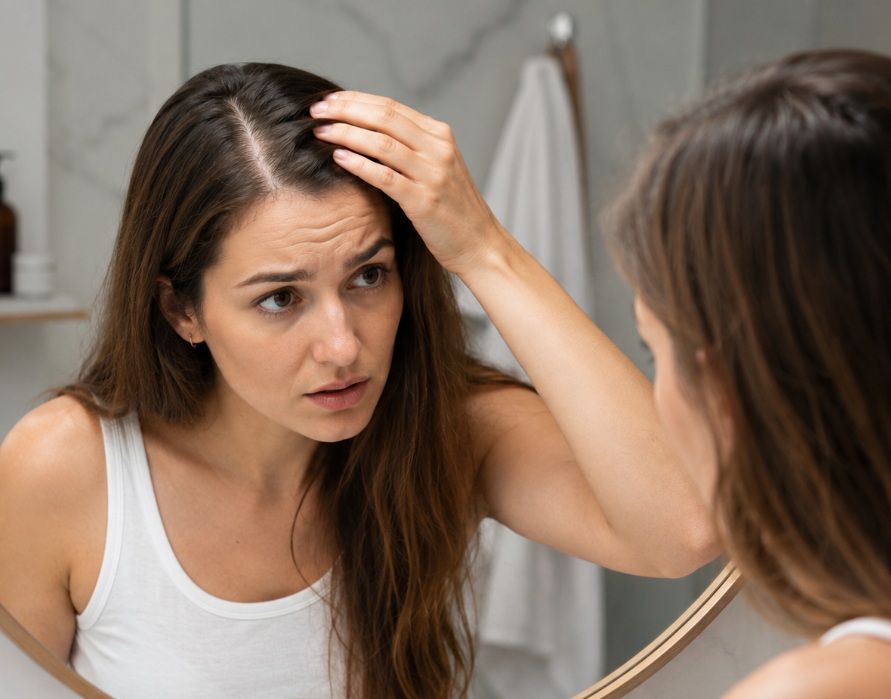
Postpartum Hair Loss: How to Reduce Shedding & Support Regrowth
Postpartum shedding is common — and often alarming. Learn why it happens, when it peaks, what you can do to minimise avoidable loss, and how to support healthier regrowth.
Quick summary: postpartum hair loss is usually temporary and hormone-driven. You may not be able to stop the shed completely, but you can reduce breakage, protect the hairline, correct common triggers and support stronger regrowth.
Why Postpartum Hair Loss Happens
Postpartum hair loss, also called postpartum shedding, is extremely common after giving birth. Although it can feel dramatic, it is usually a normal response to the hormonal changes that happen after pregnancy.
During pregnancy, higher oestrogen levels keep more hairs in the growth phase. This is why many women notice thicker hair and less shedding while pregnant.
After delivery, oestrogen drops quickly. Many hairs then move into the resting phase at the same time. A few months later, those hairs shed together, which is why postpartum hair loss can feel sudden and intense.
Key point: postpartum shedding is usually a form of telogen effluvium — a temporary shed. The aim is to protect the hair you have and support healthy regrowth while your hair cycle normalises.
Typical Postpartum Hair Loss Timeline
Everyone’s recovery is different, but postpartum shedding often follows a recognisable pattern.
- 0–3 months postpartum: hormones recalibrate and shedding may begin slowly.
- 3–6 months: shedding often peaks, especially around the hairline, temples and parting.
- 6–12 months: shedding usually eases and baby hairs begin to appear.
- 12+ months: if loss remains heavy, it is worth checking for thyroid, iron, nutrition or underlying pattern thinning.
Regrowth can look uneven at first. Short baby hairs around the hairline are often a sign of recovery, but they need gentle handling to avoid breakage.
What Postpartum Hair Loss Looks Like
Postpartum shedding is usually diffuse, meaning it comes from all over the scalp rather than one single patch.
Many women notice it most around the temples, hairline, parting, shower drain, brush or pillow.
- More hair falling out when washing or brushing
- A thinner ponytail
- Visible scalp along the parting in bright light
- A temporary “receding” look around the temples
- Short baby hairs appearing during recovery
Bald patches, smooth round areas, scalp pain, burning, inflammation or heavy scaling are not typical and should be checked professionally.
Common Triggers That Can Make Shedding Worse
The hormone shift is usually the main cause, but several postpartum factors can make shedding heavier or slow recovery.
Low iron stores
Pregnancy and birth can reduce iron stores, especially after blood loss. Low ferritin can worsen shedding and slow regrowth.
Postpartum thyroid changes
Thyroid changes can appear after pregnancy. If shedding comes with unusual fatigue, anxiety, feeling cold, palpitations or major weight changes, thyroid testing is worth discussing.
Stress, poor sleep and under-eating
Newborn life can make regular meals, sleep and recovery difficult. Low protein intake and chronic stress can make hair recovery harder.
Tight hairstyles
Tight buns, ponytails and slicked-back styles can put extra tension on the hairline when hair is already vulnerable.
Underlying female pattern thinning
If a widening part or reduced density continues to progress beyond the usual postpartum window, underlying female pattern hair loss may be involved.
What Actually Helps
The best approach is simple: reduce avoidable stress on the hair, support your body’s recovery, and give the hair cycle time to settle.
Handle hair gently
- Use a wide-tooth comb, especially when hair is wet.
- Pat hair dry with a towel or t-shirt rather than rubbing.
- Avoid tight buns, tight ponytails and tension at the temples.
- Use soft scrunchies or gentle hair ties.
Reduce heat and chemical stress
- Air-dry where possible.
- Use lower heat if blow-drying.
- Limit straighteners, curlers, bleach and harsh colour treatments during heavy shedding.
Keep the scalp clean
A clean, comfortable scalp helps create a better environment for regrowth. Wash according to your scalp type, and avoid heavy build-up at the roots if your hair already feels flat.
Protect the hairline
The temples and front hairline are often where postpartum loss looks most obvious. Avoid repeated tension and treat new baby hairs gently.
Nutrition That Supports Postpartum Hair Recovery
Perfect nutrition is not the goal. The priority is avoiding the big gaps that slow recovery.
- Protein: hair is keratin-based, so consistent protein matters.
- Iron/ferritin: low stores can worsen shedding.
- Vitamin D and zinc: common gaps that can affect hair quality.
- Omega-3 sources: useful for general recovery and inflammation balance.
- Regular meals: under-eating is a common postpartum trigger.
Simple win: keep easy protein options available — eggs, yoghurt, cooked chicken, tuna, salmon packs or a suitable protein shake.
Breastfeeding and Hair Loss
Some women continue shedding while breastfeeding, while others recover sooner. This varies widely and does not automatically mean anything is wrong.
If you are breastfeeding, be careful with hair supplements and active treatments. Many products are fine, but not everything marketed for hair is suitable during lactation.
Always check with your healthcare professional, midwife, pharmacist or GP before starting new products while breastfeeding.
What to Test For
If shedding feels extreme, you feel unwell, or hair loss continues beyond the expected recovery window, blood work can help identify hidden drivers.
- Full blood count and ferritin for iron stores
- Thyroid panel, including TSH and free T4 where appropriate
- Vitamin D
- Zinc, especially where diet or symptoms suggest a risk
- B12 and folate, especially with fatigue or restricted diets
If you had significant blood loss, prolonged fatigue or a difficult birth, it is especially worth checking iron stores and thyroid function.
A Practical 90-Day Recovery Plan
Weeks 1–2: Protect what you have
- Switch to gentle handling and avoid tight styles.
- Take a baseline photo of your hairline and parting.
- Keep your wash routine consistent.
Weeks 3–8: Remove hidden triggers
- Prioritise protein and steady meals.
- Consider blood work if symptoms suggest iron or thyroid issues.
- Keep the scalp clean and avoid heavy product build-up.
Weeks 9–12: Support regrowth
- Stay consistent while the hair cycle normalises.
- Expect baby hairs and treat them gently.
- Seek review if shedding is worsening or patchy loss appears.
Progress marker: the first win is usually reduced shedding. Visible density improvement often follows over the next few months.
Postnatal Vitamins and Supplements
A balanced diet is the foundation. Some women choose a postnatal multivitamin to help cover common nutrient gaps during recovery.
If you are considering a hair-focused supplement, suitability matters — especially if you are breastfeeding.
Important: always check supplement suitability with your healthcare professional. Some products are not recommended during pregnancy or while breastfeeding.
Drug-Free Support After Breastfeeding: HR23+
Once your clinician confirms it is appropriate after breastfeeding, HR23+ offers a comprehensive, non-drug approach to support healthier hair cycling, reduce excessive shedding and promote stronger, fuller-looking hair.
It is designed to complement gentle hair handling, solid nutrition and a scalp-friendly routine during the postpartum recovery window.
- Complements gentle handling, nutrition and scalp-friendly wash routines
- Designed for women aiming to restore thickness and resilience postpartum
- Suitable for ongoing maintenance as hair cycles normalise
When to Speak to a Professional
- Shedding remains heavy beyond 12 months postpartum
- You notice patchy bald spots or smooth round areas
- You have symptoms of thyroid imbalance, iron deficiency or scalp inflammation
- You are unsure which treatments are safe while pregnant or breastfeeding
- Hair loss is accompanied by scalp pain, burning, heavy scaling or rapid progression
FAQ: Postpartum Hair Loss
When does postpartum hair loss start and end?
It commonly begins around 3–4 months after delivery, often peaks around 4–6 months, and gradually improves over 6–12 months.
Can I prevent postpartum shedding completely?
You cannot fully stop the normal hormone-driven shift, but you can minimise breakage and avoidable loss with gentle handling, reduced heat, good nutrition and avoiding traction at the hairline.
Is postpartum hair loss normal while breastfeeding?
It can be. Some women continue shedding while breastfeeding and recover later, while others improve sooner.
Are hair supplements safe while breastfeeding?
Always check with your healthcare professional. Some ingredients are not recommended during pregnancy or breastfeeding.
When should I see a doctor?
If shedding is severe beyond 12 months, appears patchy, or comes with symptoms of thyroid issues, iron deficiency or scalp inflammation, seek medical review.
Bottom Line
Postpartum hair loss is common, usually temporary and often improves as hormones stabilise. The most useful approach is to protect the hairline, reduce breakage, support nutrition and check for common triggers if shedding feels excessive.
If hair loss is patchy, severe, painful, inflamed or continuing beyond the usual postpartum window, speak with a healthcare professional.