

Horsetail Extract for Hair Growth: Does Silica Really Help?
Horsetail extract is a traditional botanical ingredient best known in hair supplements for its naturally occurring silica. It is often promoted for stronger, healthier hair — but does horsetail actually stimulate new hair growth or prevent hair loss?
What is horsetail extract?
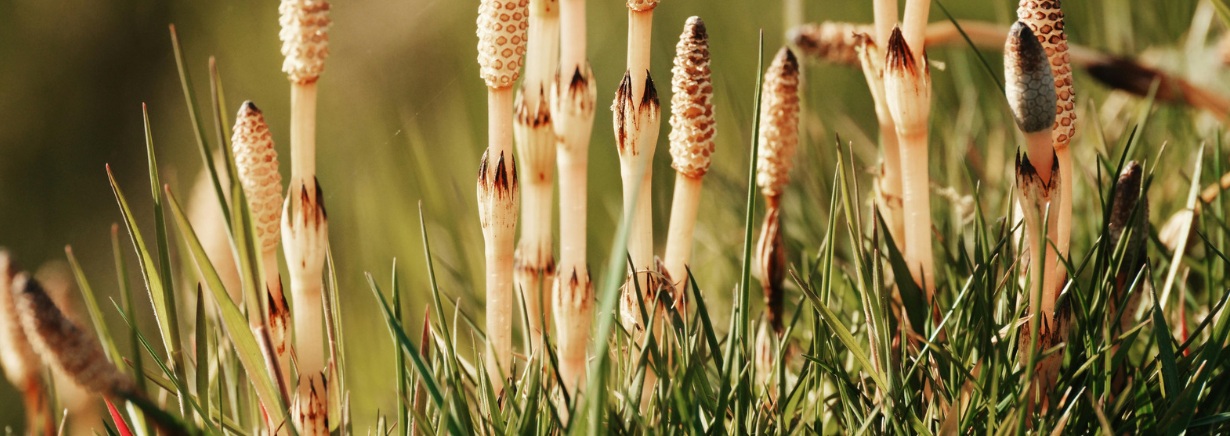
Horsetail is the common name given to plants belonging to the Equisetum genus. Equisetum arvense is the species most commonly used in herbal supplements.
The plant has a long history of traditional use and contains a mixture of naturally occurring compounds, including flavonoids, phenolic compounds and mineral-related constituents.
For hair, skin and nail products, however, horsetail is best known for one particular characteristic: its silica content.
This has led to horsetail becoming a popular ingredient in nutritional formulas intended to support the normal structure and appearance of hair.
Silica is relevant to connective-tissue and structural biology, which makes horsetail an interesting nutritional ingredient. But this does not establish horsetail as a treatment for androgenetic alopecia, alopecia areata or other medical forms of hair loss.
Why is silica associated with healthy hair?
Silicon is a naturally occurring element present in the human body and in many foods. It has attracted nutritional interest because of its possible role in connective tissue and structural health.
This is where many of the claims surrounding horsetail and hair begin.
Hair fibre quality
Research into bioavailable forms of silicon has created interest in possible effects on hair strength, elasticity and physical properties.
Structural biology
Silicon has been studied in relation to collagen and connective tissue, although the precise significance of dietary silicon in human nutrition is still being investigated.
A botanical source
Horsetail is naturally rich in silicon compounds, which explains its frequent inclusion in supplements marketed for hair, skin and nails.
Does horsetail increase collagen and strengthen hair follicles?
Horsetail is often promoted with the claim that its silica “produces collagen”, which then strengthens the hair follicle and causes new hair growth.
That is too simplistic.
Silicon has been investigated in relation to connective-tissue and collagen biology, but consuming horsetail extract should not be described as directly creating collagen inside a hair follicle.
There is also an important distinction between the quality of the existing hair fibre and the biological activity of the follicle producing it.
A nutritional ingredient could potentially support structural hair quality without necessarily reversing follicle miniaturisation or creating new hair growth.
What does the evidence actually support?
What looks reasonable
- Horsetail is a naturally silica-rich botanical.
- Silicon has been studied in connective-tissue biology.
- Some research has investigated silicon and hair-fibre quality.
- Horsetail contains flavonoids and other plant compounds.
- It can form part of a broader nutritional hair formula.
- Structural hair support is a more plausible use than regrowth claims.
What hasn't been established
- That horsetail reverses male pattern baldness.
- That it treats female pattern hair loss.
- That it prevents alopecia areata.
- That it blocks DHT.
- That it stops telogen effluvium or seasonal shedding.
- That horsetail alone reliably stimulates new scalp-hair growth.
Can horsetail extract make hair grow faster?
There is currently insufficient clinical evidence to say that horsetail extract reliably increases the rate of scalp-hair growth.
Some studies involving particular forms of silicon have investigated characteristics such as hair strength, brittleness and hair-fibre properties.
Those findings are interesting, but they should not be translated into claims that horsetail itself activates dormant follicles or substantially accelerates hair growth.
Stronger-looking hair and more hair are not the same outcome.
Reduced breakage or improvements in the physical properties of the hair shaft can make hair look and feel healthier.
That is different from increasing follicle number, reversing miniaturisation or treating the biological cause of pattern hair loss.
Does horsetail block DHT?
Horsetail is sometimes included alongside ingredients such as saw palmetto, pumpkin seed and nettle in botanical hair formulas.
That does not make horsetail itself a DHT blocker.
There is not good clinical evidence showing that horsetail extract meaningfully reduces DHT or inhibits the androgen-driven follicle miniaturisation associated with male and female pattern hair loss.
Its role within a formula is better understood as nutritional and structural support rather than direct androgen suppression.
What types of hair loss can horsetail treat?
Horsetail should not be regarded as a treatment for a particular type of alopecia.
Androgenetic alopecia, alopecia areata, telogen effluvium, traction alopecia and hair loss associated with nutritional deficiencies all have different causes.
No single botanical ingredient should be expected to address all of them.
This is particularly important with alopecia areata, which is an autoimmune condition and should not be described as something horsetail or a general hair supplement can prevent.
Three claims that need perspective
“Silica makes hair follicles grow.”
Silicon has interesting structural and connective-tissue biology, but that does not demonstrate that silica directly activates hair follicles or creates new scalp growth.
“Horsetail strengthens the follicle and stops hair loss.”
Hair-fibre strength and follicle miniaturisation are different issues. Improving structural hair quality would not necessarily stop genetically driven hair loss.
“Horsetail works better when combined with DHT blockers.”
Horsetail is commonly combined with other botanicals, but there is not enough clinical evidence to claim that these combinations produce a proven synergistic hair-regrowth effect.
Is horsetail extract safe?
“Natural” does not automatically mean side-effect free.
Herbal extracts can vary in composition and concentration, and horsetail supplements may not be suitable for everyone.
Horsetail can also have a diuretic effect, and certain preparations may contain compounds that make long-term or excessive use inappropriate. Product quality and appropriate formulation therefore matter.
Anyone who is pregnant or breastfeeding, takes medication, has a medical condition or is unsure whether a botanical supplement is appropriate should seek suitable professional advice before use.
Why does HR23+® contain horsetail extract?
Horsetail extract is included in HR23+ as one component of its broader 23-ingredient nutritional hair-support formula.
Its silica content makes it particularly interesting from the perspective of hair structure and nutritional support.
HR23+ combines horsetail with selected vitamins, minerals and botanical ingredients rather than relying on horsetail as a stand-alone treatment for hair loss.
Silica-rich botanical
Horsetail is best known in hair supplementation as a natural botanical source of silicon compounds.
A supportive role
The strongest rationale relates to structural hair support rather than claiming direct follicle regrowth.
Part of a wider formula
HR23+ combines horsetail with 22 other selected vitamins, minerals and botanical ingredients.
Support, not treatment
Horsetail should not be presented as a treatment for androgenetic alopecia, alopecia areata or other medical causes of hair loss.
Horsetail has an interesting role in hair support — but don't confuse silica with a hair-growth drug.
Horsetail's naturally occurring silica provides a reasonable nutritional basis for its long-standing use in hair, skin and nail supplements. Research into silicon and hair-fibre properties is also interesting.
The evidence becomes much weaker when claims move from supporting hair structure to treating hair loss or stimulating substantial new follicle growth.
Horsetail is therefore better viewed as a supporting botanical ingredient within a wider formula, rather than a stand-alone hair-loss treatment.
Horsetail extract. One part of a 23-ingredient formula.
HR23+® combines horsetail extract with 22 other selected vitamins, minerals and botanical ingredients in one dedicated daily nutritional hair-support formula for men and women.
Explore HR23+®Horsetail extract and hair growth: FAQ
Does horsetail extract help hair growth?
Horsetail is a silica-rich botanical commonly used in hair supplements. There is some interest in silicon and hair-fibre quality, but direct clinical evidence showing that horsetail itself stimulates substantial new scalp-hair growth is limited.
Why is silica used in hair supplements?
Silicon has been investigated in relation to connective tissue and the physical properties of hair. This provides a rationale for silica-rich ingredients in hair-support products, although it does not make silica a treatment for baldness.
Can horsetail make hair thicker?
Research into particular forms of silicon has explored hair strength and fibre characteristics. This is different from demonstrating that horsetail increases the number of hairs growing from the scalp.
Does horsetail block DHT?
There is not good clinical evidence showing that horsetail extract meaningfully blocks DHT in the human scalp.
Can horsetail treat alopecia?
Horsetail has not been established as a treatment for androgenetic alopecia, alopecia areata or other medical forms of hair loss.
Is horsetail the same as silica?
No. Horsetail is a plant that naturally contains silicon compounds. Silica is one of the main reasons horsetail has become popular in hair, skin and nail supplements.
Why is horsetail extract included in HR23+®?
Horsetail is included as a silica-rich botanical component of HR23+'s broader 23-ingredient nutritional hair-support formula, rather than as a stand-alone treatment for hair loss.
This article is for general information only and should not be considered medical advice. Persistent, sudden, severe or unexplained hair loss should be appropriately assessed. Supplements and botanical extracts can cause side effects or interact with medicines, and individual responses vary.