

What Is DHT? Understanding the Hormone Behind Pattern Hair Loss
DHT — dihydrotestosterone — is one of the most important hormones in male pattern hair loss and can also play a role in female pattern hair loss. But DHT itself isn't simply “bad”. The crucial factor is how genetically susceptible hair follicles respond to it.
What exactly is DHT?
Dihydrotestosterone (DHT) is a naturally occurring androgen hormone produced from testosterone.
It is part of normal human biology and has important roles in androgen signalling and male sexual development. Having DHT in the body does not mean that you will lose your hair.
The hair-loss problem occurs when follicles in particular areas of the scalp are genetically susceptible to androgen signalling.
In those follicles, DHT can contribute to a gradual process known as follicular miniaturisation. Across repeated hair cycles, the hairs produced can become progressively shorter, finer and less visible.
Two people can have similar circulating androgen levels yet experience very different patterns of hair loss. Genetic susceptibility within the follicle is a major part of the explanation.
What does DHT do in the body?
DHT is usually discussed negatively on hair-loss websites, but it is a normal hormone rather than a toxin or abnormal substance that the body needs to eliminate.
DHT is a potent androgen and has important roles during development. It also acts on androgen-responsive tissues including the prostate, skin and hair follicles.
This is why reducing DHT pharmacologically is different from simply taking a vitamin or general hair supplement. It deliberately changes an androgen pathway and therefore requires appropriate consideration of benefits and potential adverse effects.
How is DHT produced?
DHT is produced when an enzyme called 5-alpha-reductase converts testosterone into dihydrotestosterone.
Different forms of 5-alpha-reductase are expressed in tissues throughout the body, including androgen-responsive tissues and the skin.
This conversion pathway matters in pattern hair loss because medications such as finasteride work by inhibiting 5-alpha-reductase and therefore reducing DHT production.
Testosterone
Testosterone acts as the starting androgen in the conversion pathway.
5-alpha-reductase
The enzyme 5-alpha-reductase converts some testosterone into DHT.
DHT
DHT can then bind to androgen receptors in susceptible tissues, including genetically sensitive scalp follicles.
How does DHT cause hair loss?
In androgenetic alopecia, DHT interacts with androgen receptors in genetically susceptible scalp follicles.
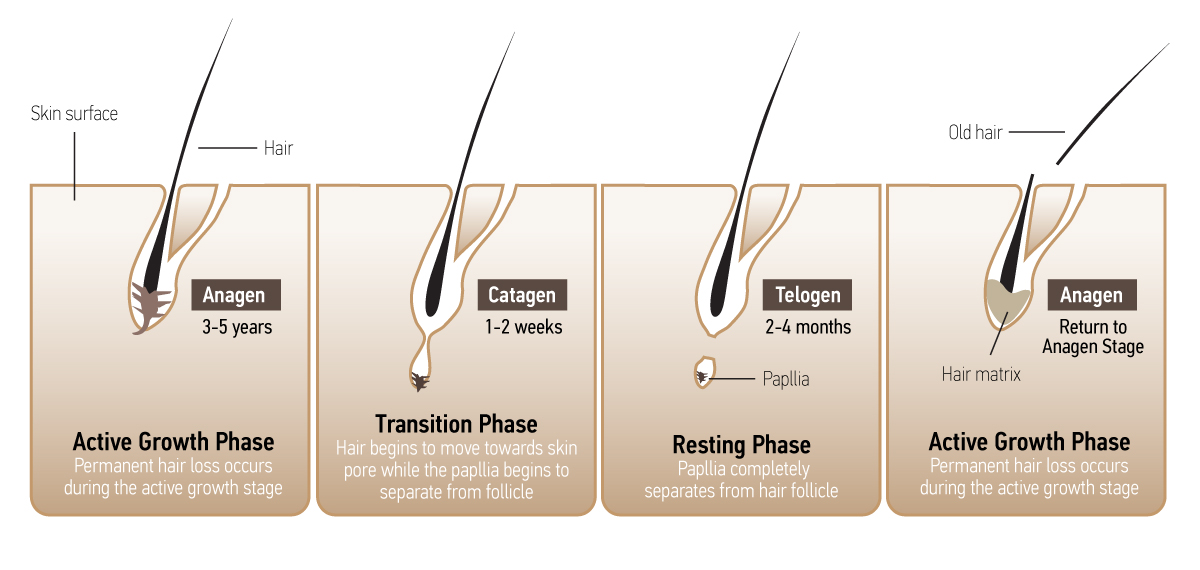
The response is not simply that the hair suddenly falls out. Pattern hair loss generally develops through progressive changes to the follicle and its growth cycle.
Shorter productive growth
The productive growth phase can become shorter, meaning affected hairs have less opportunity to grow long and thick.
Finer hairs
Successive cycles can produce increasingly fine, short hairs rather than the thicker terminal hairs previously produced.
Reduced density
As more follicles miniaturise, scalp coverage gradually decreases and characteristic patterns of thinning become visible.
Who is sensitive to DHT?
Genetic susceptibility is central to androgenetic alopecia.
Some people's scalp follicles respond strongly to androgen signalling, while other people retain dense hair despite having normal circulating androgen levels throughout life.
Susceptibility also varies across the scalp.
In men, follicles around the temples, frontal scalp and crown are commonly affected, while follicles around the sides and back tend to be more resistant. This relative resistance is one reason those areas are commonly used as donor regions during hair transplantation.
Genetics therefore helps explain both who develops pattern hair loss and where the thinning occurs.
Does DHT affect men and women differently?
DHT has a well-established role
Androgen signalling, particularly involving DHT, is central to male androgenetic alopecia.
The typical pattern involves recession at the temples or frontal hairline, thinning at the crown, or a combination of both.
The biology is more complex
Androgens can play a role in female pattern hair loss, but the relationship is less straightforward than it is in men and women can develop pattern thinning without obvious androgen excess.
A widening centre part and reduced density over the top of the scalp are common presentations.
Not all hair loss is caused by DHT
DHT receives enormous attention because androgenetic alopecia is so common, but it should not be used as an explanation for every type of hair loss.
Sudden or diffuse shedding can have very different causes, including illness, physiological stress, significant dietary restriction, nutritional deficiency, medications and telogen effluvium.
Patchy loss can point towards other conditions, while scalp symptoms such as marked redness, scaling, pain or inflammation may require a different approach again.
Pattern matters.
Gradual recession or patterned thinning is very different from suddenly shedding large amounts of hair across the entire scalp.
If the cause isn't DHT-driven, trying to “block DHT” may be addressing the wrong problem.
How can the effects of DHT-related hair loss be managed?
There is no single approach that is right for everyone. Options differ significantly in their evidence, mechanism, risks and purpose.
Finasteride
Finasteride inhibits 5-alpha-reductase, reducing the conversion of testosterone into DHT. It has substantial clinical evidence for slowing male pattern hair loss and can produce improvement in some men.
It is a medication with potential adverse effects and is not appropriate for everyone, so suitability and risk should be considered appropriately.
Minoxidil
Minoxidil is an established hair-loss treatment but it is not a DHT blocker.
Its mechanism is different, which is why it may be used separately or alongside approaches targeting androgen-driven miniaturisation.
Nutritional support
Nutrition does not switch off genetic sensitivity to DHT, but inadequate nutritional status can coexist with pattern hair loss and may contribute additional shedding.
Iron, zinc, vitamin D and other nutrients may be relevant depending on the individual's diet, health and nutritional status.
Botanical ingredients
Saw palmetto, pumpkin seed and other botanical ingredients are frequently researched or marketed in the context of androgen pathways and hair.
Some have interesting preliminary evidence, but the evidence base is considerably less established than for prescription 5-alpha-reductase inhibitors and they should not be presented as direct equivalents.
How long does DHT-related hair loss take to improve?
Hair changes slowly because follicles operate through long biological growth cycles.
For established treatments, meaningful assessment generally requires months rather than days or weeks. The exact timeline depends on the treatment, severity and duration of hair loss, individual response and whether the original diagnosis is correct.
It is therefore better to assess changes over time using consistent photographs and overall density rather than expecting a fixed result by a particular week.
With androgenetic alopecia, maintaining existing hair can itself represent a successful outcome, particularly when the natural expectation without treatment would be continued progression.
Four things people often get wrong about DHT
“DHT is bad for the body.”
DHT is a normal androgen with important biological roles. The problem in pattern hair loss is the response of genetically susceptible follicles.
“Bald men have more DHT.”
Pattern hair loss cannot be explained simply by circulating DHT levels. Follicular genetic susceptibility is crucial.
“Every type of hair loss is caused by DHT.”
Telogen effluvium, alopecia areata, nutritional deficiencies, traction and numerous other causes of hair loss involve different mechanisms.
“The goal is to eliminate DHT completely.”
DHT is a naturally occurring hormone. Hair-loss treatments aim to manage the biological process contributing to miniaturisation, not to remove a normal hormone from the human body entirely.
Where does HR23+® fit into a DHT hair-loss routine?
HR23+ is a non-medical nutritional hair-support supplement rather than a prescription DHT treatment.
The formula combines vitamins, minerals and selected botanical ingredients, including ingredients that have attracted research interest in relation to hair and androgen pathways.
It is important to distinguish this from the established pharmacological DHT reduction produced by medicines such as finasteride.
HR23+ is designed instead as a broader daily hair-support formula for men and women who want nutritional and botanical support as part of their routine.
Broad-spectrum formula
Selected vitamins, minerals and botanical ingredients in one daily hair-support formula.
Hair-health support
The formula includes micronutrients selected for their recognised nutritional roles and relevance to normal hair.
A wider approach
Botanical ingredients complement the nutritional components of the formula without being presented as prescription-equivalent DHT blockers.
Supplement rather than drug
HR23+ provides nutritional hair support and does not perform the same pharmacological function as finasteride or minoxidil.
DHT matters — but follicle sensitivity is the key.
DHT is one of the central biological drivers of male androgenetic alopecia and can also be relevant to female pattern hair loss.
But simply having DHT does not make somebody bald.
Pattern hair loss develops because genetically susceptible follicles respond differently to androgen signalling and progressively miniaturise.
Understanding that distinction makes it much easier to separate genuine DHT-related hair loss from the many other conditions that can cause shedding and thinning.
A broader approach to supporting your hair.
HR23+® combines 23 selected vitamins, minerals and botanical ingredients in one dedicated daily nutritional hair-support formula for men and women.
Explore HR23+®DHT and Hair Loss: FAQ
What is DHT?
DHT, or dihydrotestosterone, is a naturally occurring androgen hormone made from testosterone through the action of the enzyme 5-alpha-reductase.
Does DHT cause hair loss?
DHT plays a central role in male pattern hair loss and may contribute to female pattern hair loss. The key factor is genetic susceptibility of particular scalp follicles to androgen signalling.
Does high DHT mean you will go bald?
No. Pattern hair loss is not determined simply by the amount of DHT in the bloodstream. Genetic follicle sensitivity is extremely important.
Can women be affected by DHT?
Yes. Androgens can contribute to female pattern hair loss, although the hormonal biology of female pattern thinning is more complex and not all affected women have elevated androgen levels.
Does minoxidil block DHT?
No. Minoxidil is an established hair-loss treatment, but it does not work by inhibiting DHT production.
Does finasteride block DHT?
Finasteride inhibits the enzyme 5-alpha-reductase and therefore reduces the conversion of testosterone into DHT. It is an established treatment for male pattern hair loss.
Can natural ingredients block DHT?
Several botanical ingredients, including saw palmetto and pumpkin seed, have been researched in relation to androgen pathways and hair. However, evidence is more limited than for established prescription 5-alpha-reductase inhibitors and they should not be treated as direct equivalents.
Do DHT-blocking shampoos work?
Shampoos can be useful for cleansing and managing certain scalp conditions, but a product being marketed as a “DHT-blocking shampoo” does not mean it produces the same systemic DHT reduction as a 5-alpha-reductase inhibitor.
Can DHT-related hair loss be reversed?
Some miniaturised follicles can respond to appropriate treatment, particularly when intervention begins before hair loss becomes very advanced. Results vary, and maintaining existing hair can also be an important treatment success.
Is all hair loss caused by DHT?
No. Telogen effluvium, alopecia areata, nutritional deficiencies, traction and many other conditions can cause hair loss through mechanisms unrelated to DHT.
Is HR23+ a DHT blocker?
HR23+ is a non-medical nutritional hair-support supplement containing vitamins, minerals and selected botanical ingredients. It should not be considered equivalent to prescription medications that directly reduce DHT through 5-alpha-reductase inhibition.
This article is for general information only and should not be considered medical advice. Hair loss has many possible causes. Persistent, sudden, severe or unexplained hair loss should be appropriately assessed. Prescription hair-loss medicines have potential risks and are not suitable for everyone.